
Dining
'Disgruntled' ex-Chili's employee drove stolen car into Pennsylvania restaurant: Police
By Carlos Ramirez
Advertisement · Why this ad?
Emily Tran is a passionate arts reporter with a degree in Fine Arts from Columbia College Chicago. She previously worked at the Chicago Reader and brings her love for local culture and creativity to her reporting on Evanston's vibrant arts scene.
More from Emily →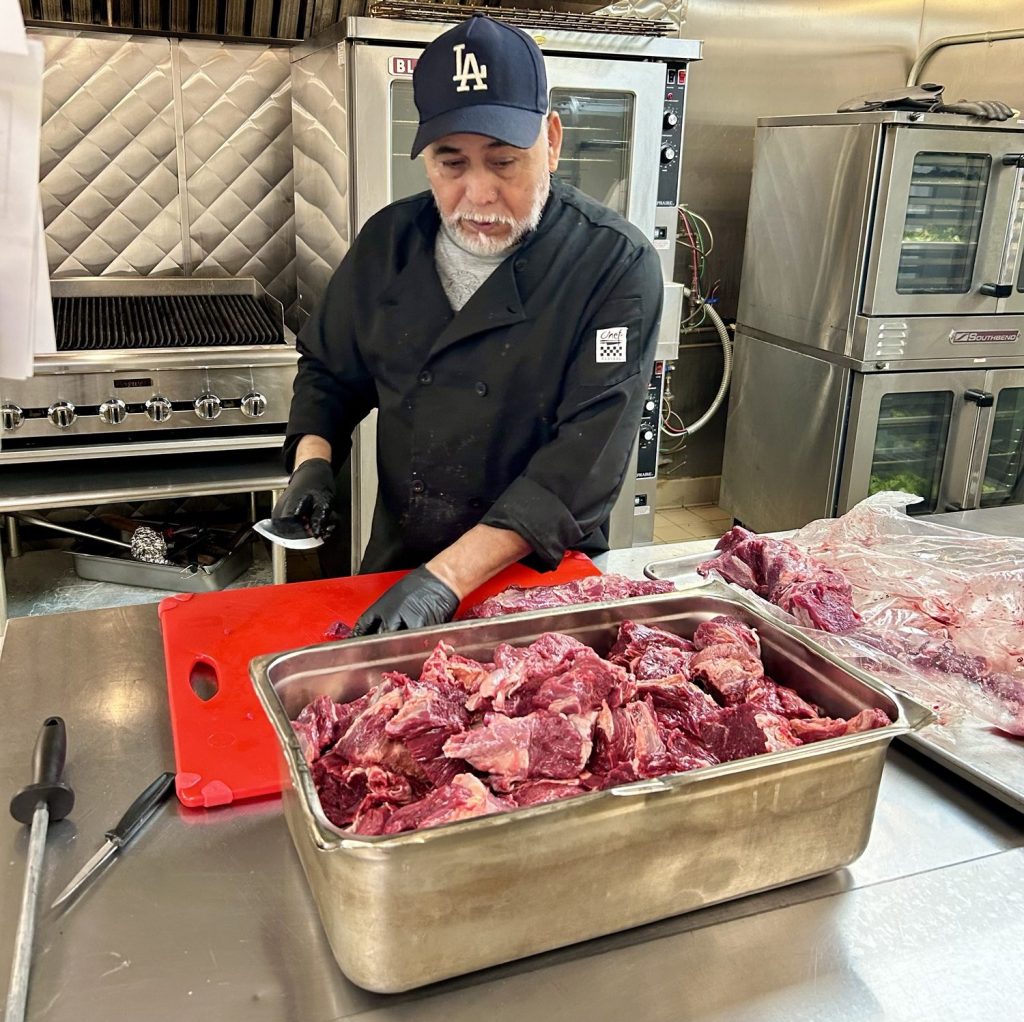
The aroma of roasting spices and simmering vegetables hung in the air, a comforting counterpoint to the brisk November morning. It wasn’t a restaurant, though the care and dedication poured into its preparations rivaled any fine dining establishment. This was the Meals on Wheels Northeastern Illinois production kitchen, a place where fresh, flavorful meals are crafted with an understanding of a demographic often overlooked – our aging neighbors and those with disabilities. Jess Ticus, a Meals on Wheels board member and *RoundTable* reader, sparked my curiosity with a suggestion to peek behind the scenes of this vital community resource. The result is not a review in the traditional sense, but rather a glimpse into the heart of an operation driven by compassion and culinary expertise.
Located at 1723 Simpson St. in Evanston, Meals on Wheels Northeastern Illinois has been serving the community since 1976. The organization’s mission is clear: to provide home-delivered meals to older adults and people with disabilities who are unable to prepare meals for themselves. The facility itself opened in June 2020, designed with the needs of its clients in mind. Director of Food Services Sam Landman takes pride in offering meals that are tailored to the unique tastes of older adults, ensuring that each bite is a reminder of cherished memories. “We deliver something unique: food tailored to the way older adults actually taste,” Landman said. “Most kitchens — in hospitals, nursing homes or even competitors — cook for older adults the same way they cook for younger people. But older adults don’t have the same taste receptors. We offer food they can truly taste, food that reminds them of their childhood and the meals their mothers and grandmothers made.”
Landman’s philosophy extends beyond taste; it’s about preserving dignity. “I want to give them restaurant-quality meals with plenty of color and texture,” he said. “We eat with our eyes, too.” The meals are carefully balanced and dietician-approved, accounting for various dietary restrictions. The kitchen's production process is a bustling hub of activity, fueled by a dedicated team including Landman, and his father, Jesus Zaenz, and son, Jesus Morales. The trio’s seamless communication is crucial when producing an average of 500 meals daily and prepping some items a day or two in advance.
As I observed, they meticulously cut whole sirloins into individual portions, marinating them in a blend of olive oil and freshly toasted spices for barbacoa – a testament to Landman’s commitment to providing restaurant-quality meals with visual appeal and robust flavor. Landman explained his approach to seasoning, noting that salt isn't the answer. “The biggest complaint I’ve heard from older adults in the past is that the food is too bland,” he said. “But salt is not the answer. As a matter of fact, we rarely if ever use salt to season food here. The elder palate is more sensitive to salt, and for many, its use is restricted. So instead, we increase the flavor profile with garlic, citrus and other spices.”
The Meals on Wheels team is acutely aware of the dietary restrictions many clients face. Reminders and instructive stickers adorn the packing area, guiding volunteers in avoiding allergens and accommodating conditions such as diverticulitis, diabetes, essential tremors, and kidney function. Diabetic clients receive carb-restricted meals with an emphasis on vegetables, while others might receive softer foods or pre-cut proteins to aid in chewing and dexterity—each meal carefully approved by a dietician. Beyond the food itself, Meals on Wheels provides a vital social connection. Unless otherwise directed, delivery volunteers are instructed to make visual contact with the client at a minimum, and for some, it may be the only person they see on a regular basis.
The heart of Meals on Wheels, however, lies in its volunteers. Friends Tami Teppo and Beth DeWall, both of Wilmette, have been Tuesday morning volunteers for the past five years. Together, we packed the day’s offerings: a choice of oven-fried chicken or spinach/mushroom/ricotta pie, served with mashed potatoes and mixed steamed veggies. Once the food was portioned out and dietary restrictions accommodated, the trays were run through a sealing machine and placed into the appropriate cold packs for pickup and delivery.
Justin Block, the Executive Director since September 2025, has witnessed firsthand the increasing demand for Meals on Wheels’ services. He previously served at Feeding America and the Friendship Center Food Pantry in Chicago. “We are serving 40% more people than when I arrived, and still only scratching the surface of need in our community,” Block stated, emphasizing the urgency of expanding operations. The organization has seen a rejuvenation within its board, adding six new members who are taking an intentional and strategic approach to growth, recognizing that the high volunteer-to-staff ratio allows for efficient scaling and cost management. “The high volunteer to staff ratio allows us to be efficient in scaling and managing costs effectively,” Block said. Block is hopeful about the organization’s future. “It takes a village,” he added.
Volunteers are the backbone of Meals on Wheels. If you’re interested in getting involved, you can volunteer Learn more about volunteering opportunities here. Financial contributions are also gratefully accepted, directly supporting the purchase of food and supplies. Donations can be made online can be made online through the organization's website. Referring a friend or family member who may benefit from Meals on Wheels services is a simple yet impactful way to help ensure that no one goes hungry or feels alone.
The need is great, so if you have any interest in getting involved, you can volunteer Learn more about volunteering opportunities here. It takes a village.
Witnessing the inner workings of Meals on Wheels Northeastern Illinois was a powerful reminder of the quiet struggles faced by many of our neighbors. As we age, maintaining independence and enjoying simple pleasures like a good meal can become increasingly challenging. The dedication of Chef Landman and his team, along with the tireless efforts of the volunteers, speaks volumes about our community’s commitment to caring for its most vulnerable members.
By Carlos Ramirez

By Emily Tran

By Aaron Chen

By Carlos Ramirez